Survival First Aid Skills: 5 Emergency Medical Basics to Learn
Medical disclaimer
This article is for general emergency preparedness education only. It is not medical advice and does not replace certified first aid, CPR, bleeding control, or professional medical training. Call emergency services whenever possible and follow local medical guidance.
Quick answer
The five survival first aid skills every prepared family should learn are bleeding control, shock response, splinting, wound care, and CPR basics. These skills are valuable during disasters because professional help may be delayed.
Why first aid belongs in every preparedness plan
Water, food, and power are important, but injury can become the most urgent problem in a disaster. Broken glass, fallen branches, burns, floods, vehicle accidents, and unstable structures can cause injuries when clinics and hospitals are hard to reach. Basic first aid knowledge helps you stay calm, protect the injured person, and buy time until help arrives.
Skill 1: Bleeding control
Severe bleeding can become life-threatening quickly. The basic response is to stay safe, call for help, expose the wound if needed, apply firm direct pressure, and use a clean dressing or cloth. If bleeding is life-threatening and direct pressure is not enough, a tourniquet may be needed on an arm or leg if you have training.
Keep gloves, gauze, compression bandages, and a commercial tourniquet in your first aid kit. Take a bleeding control class so you know when and how to use them.
Skill 2: Shock response
Shock can happen after trauma, bleeding, burns, severe allergic reaction, or illness. Warning signs may include pale or clammy skin, weakness, confusion, rapid breathing, and a fast pulse. Keep the person still, warm, and calm. Call for emergency help. Do not give food or drink if the person may need surgery, has altered consciousness, or may choke.
Skill 3: Splinting fractures and sprains
If someone may have a fracture, avoid unnecessary movement. Support the injured area in the position found. A splint should limit movement and support the joints above and below the injury. Use padded boards, rolled magazines, trekking poles, cardboard, or a commercial splint.
Check circulation beyond the injury before and after splinting if you know how. Look for worsening pain, numbness, tingling, cold skin, or color change. Seek medical care as soon as possible.
Skill 4: Wound cleaning and infection prevention
Small wounds can become serious when sanitation is poor. Wash hands or use sanitizer first. Rinse dirt from minor wounds with clean water. Cover with a clean dressing and change it regularly. Watch for redness, swelling, increasing pain, warmth, pus, fever, or red streaks.
Do not close deep, dirty, animal-bite, or puncture wounds with improvised methods. These need medical evaluation. Keep tetanus vaccination status in mind and consult a medical professional.
Skill 5: CPR basics and rescue response
CPR can help someone whose heart has stopped. The correct steps depend on age, training, and local guidance. The best preparation is a certified CPR class with AED training. Keep emergency numbers printed and teach family members how to describe the location, what happened, and the condition of the person.
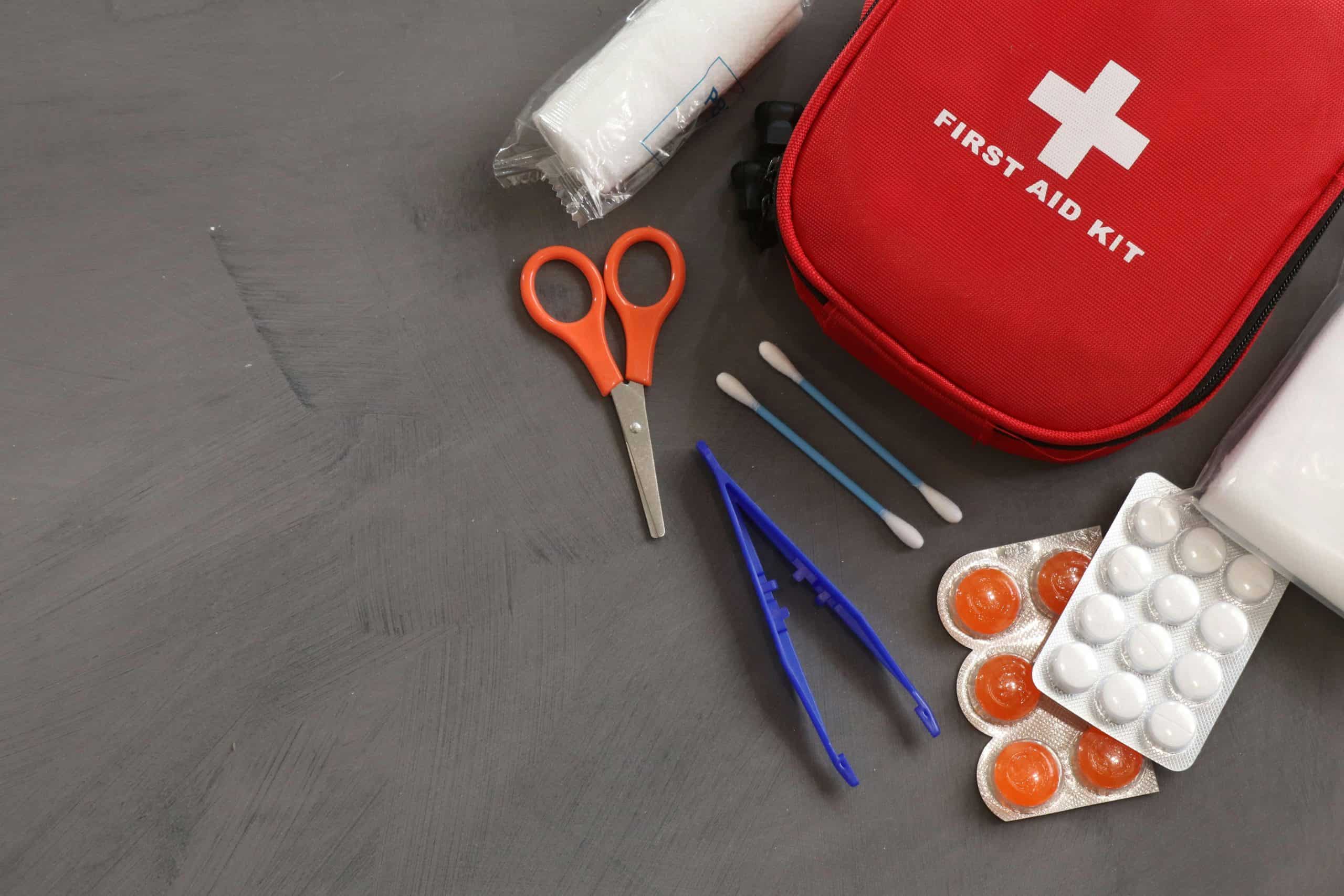
What to put in a survival first aid kit
- Nitrile gloves.
- Sterile gauze and roller gauze.
- Compression bandages.
- Adhesive bandages.
- Antiseptic wipes.
- Tweezers and small scissors.
- Elastic wrap.
- Burn dressing.
- Instant cold pack.
- CPR face shield.
- Emergency blanket.
- Pain reliever and personal medication.
- First aid manual.
- Tourniquet and hemostatic gauze if trained.
Common first aid mistakes
Do not put yourself in danger. Do not move a seriously injured person unless they are in immediate danger. Do not give food or drink to an unconscious or severely injured person. Do not rely on internet articles instead of training. Do not store first aid supplies without checking expiration dates.
FAQ
What first aid skill should I learn first?
Learn bleeding control and CPR first because they are time-sensitive skills.
Should I keep a tourniquet at home?
A tourniquet can be lifesaving for severe limb bleeding, but you should buy a real one and learn how to use it properly.
Can I use honey or natural remedies on wounds?
For emergency preparedness content, recommend clean water, clean dressings, and medical care. Avoid suggesting improvised treatments for serious wounds.
How often should I inspect my first aid kit?
Check it every six months and after every use.
Final recommendation
First aid is a skill, not just a kit. Build supplies, take certified training, practice emergency communication, and link this guide from your main emergency preparedness page.